Posts

Chilli Plant Update - 26th May 2018

The Chilli Gods must be pleased because they've blessed us all with really nice weather over the past few weeks, and as a result the tribe is coming along nicely. All of the plants were re-potted into their third pots about three weeks ago, which is the final pot for some varieties, but others may be re-potted into larger pots over the coming weeks.

Aji Charapita - 26th May 2018

Chocolate Habanero - 26th May 2018

Dorset Naga - 26th May 2018

Inca Berry - 26th May 2018

Malawi Bird's Eye - 26th May 2018

Mini Rocoto Brown - 26th May 2018

Red Mayan Habanero - 26th May 2018

Yellow Jelly Bean Habanero - 26th May 2018

The fresh compost contains enough nutrients to keep the plants nourished for the next three to four weeks, and after this time they will be given their first of many weekly feeds. People new to growing chilli plants often apply fertiliser too frequently, and this is a very big mistake!

Chilli Plant Update - 1st April 2018

The Capsicum chinense varieties and Mini Rocoto Brown were in need of new shoes a couple of weeks ago because their roots were poking through the drainage holes in the pots, so they were all were re-potted into their second pots on the 13th March. Due to time restrictions I was unable to take photos of each variety, so instead you'll just have to settle for these next two showing a bucket of compost and a happy looking Dorset Naga plant.

Compost Mixture - 13th March 2018

Dorset Naga - 13th March 2018

The Capsicum annuum and Capsicum baccatum varieties, including the ones I started for other people, went into their second pots yesterday. They've all had a growth surge in the past week and I think it may be due to the rainwater I've been giving them.

Annuum and Baccatum Varieties - 31st March 2018

The entire chilli plant tribe has been moved from under the grow lights in the lounge and is now living in the front porch, where the temperature is being maintained at a minimum of 60F using a thermostatically controlled oil heater.

Chilli Plant Update - 5th March 2018

We're cooking on gas here at the chilli plant house of love. Chocolate Habanero, Dorset Naga and Mini Rocoto Brown were pricked-out on the 18th February, and Yellow Jelly Bean Habanero, Red Mayan Habanero and Aji Charapita were pricked-out four days later. All varieties took between 7 and 14 days to germinate.

Aji Charapita - 22nd February 2018

Chocolate Habanero - 22nd February 2018

Dorset Naga - 22nd February 2018

Mini Rocoto Brown - 22nd February 2018

Red Mayan Habanero - 22nd February 2018

Yellow Jelly Bean Habanero - 22nd February 2018

On the 18th February I sowed seeds for Aji Lemon (not for me), Inca Berry and Malawi Bird's Eye. All three varieties germinated within seven days and were pricked-out yesterday. Two people have approached me in recent weeks asking for mild chilli plants, so I decided to grow them some Aji Lemon plants. Although this variety is not really considered as mild, it's probably the mildest one I have in my seed collection at present, so it will have to do. At the same time I also sowed seeds for a couple of other fairly mild varieties, just in case said people would like a choice of what to grow.

Aji Lemon - 4th March 2018

Inca Berry - 4th March 2018

Malawi Bird's Eye - 4th March 2018


Things are picking up nicely now. The evenings are drawing out and spring is officially 15 days away. I do enjoy the seasonal transitions, and starting chilli plants from seed is a great way to help a grower through the dark times of winter.

The 2018 Chilli Growing Season Has Begun

Well, it's that time of year again. Yeah, you guessed it, folks — the 2018 chilli growing season has begun! Spring is officially six weeks and three days away and soon the sun will hopefully be cracking the flagstones, which will be a much welcomed change from the miserable weather we're having at present.
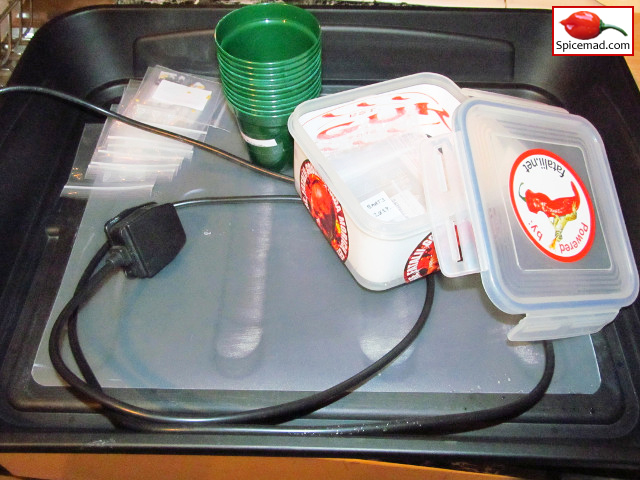
Season Started - 3rd February 2018

This afternoon I sowed all the seeds for the Capsicum chinense varieties and Mini Rocoto Brown, which is a new one for me. It's always recommended to sow the seeds for Capsicum pubescens varieties as early as possible because some of them can take an entire age to ripen, and having never grown this variety before I really don't know what to expect.

Here's a list of all the varieties that were sown earlier:
  • Aji Charapita
  • Chocolate Habanero
  • Dorset Naga
  • Mini Rocoto Brown
  • Red Mayan Habanero
  • Yellow Jelly Bean Habanero

The first job as always was to sterilise the plant pots, clear plastic cups (you'll see what these are used for in just a moment), heated propagator and compost. A mild bleach solution was used to sterilise the equipment and the compost was sterilised in the oven at 150C for one hour and then left to cool.
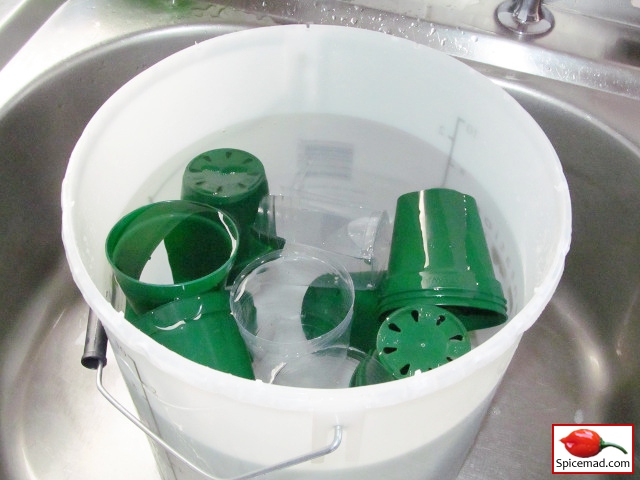
Sterilised Plant Pots and Clear Plastic Cups - 3rd February 2018

Sterilising the compost kills off any nasties, such as larvae eggs or fungi spores, which could potentially take up residence later on and destroy some of the seeds. The heat coming out from the propagator would soon awaken these little beasties. I've had some batches of seeds fail in previous seasons and on closer inspection it wasn't uncommon to find small white larvae feasting on them. Since I began sterilising the compost this has no longer been an issue.
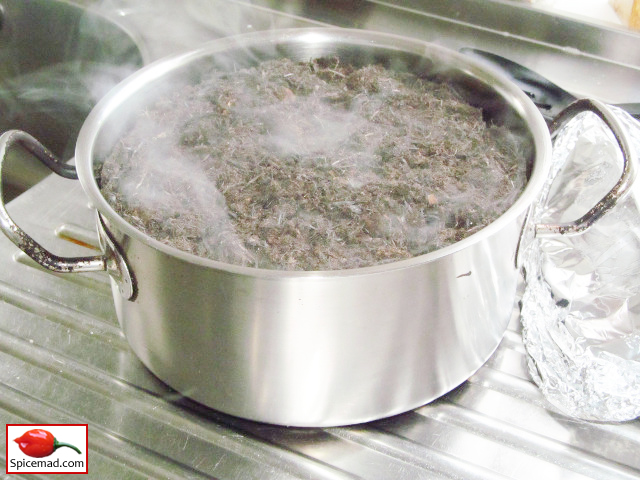
Sterilised Compost - 3rd February 2018

I always sow more seeds than I need for each variety so that I can pick the healthiest-looking seedlings to grow. Not all seeds will germinate, and those that do will not always grow into healthy seedlings. I hate having to sow new seeds for a given variety because the first batch was of poor quality. It's at times like that when I wish I'd sown a few more, so now I do.
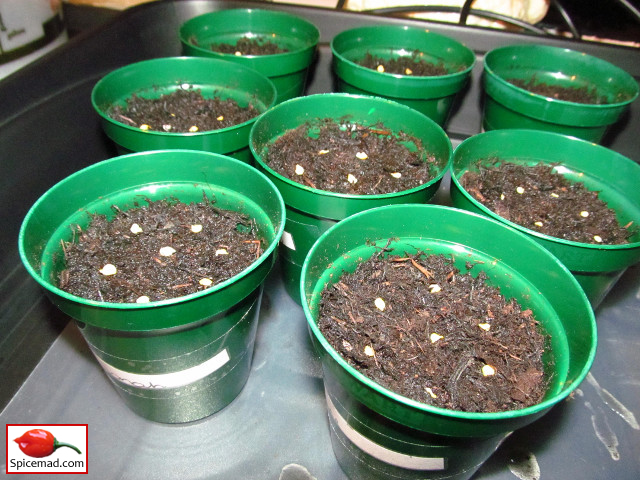
Chinense and Pubescens Seeds Sown - 3rd February 2018

After covering the seeds with a thin layer of compost and applying water, I place a clear plastic cup over each plant pot to help retain heat and moisture. These will be removed for a few hours each evening to help with air circulation once the seeds have germinated. All empty space in the heated propagator is filled with scrunched up newspaper to help retain more heat.
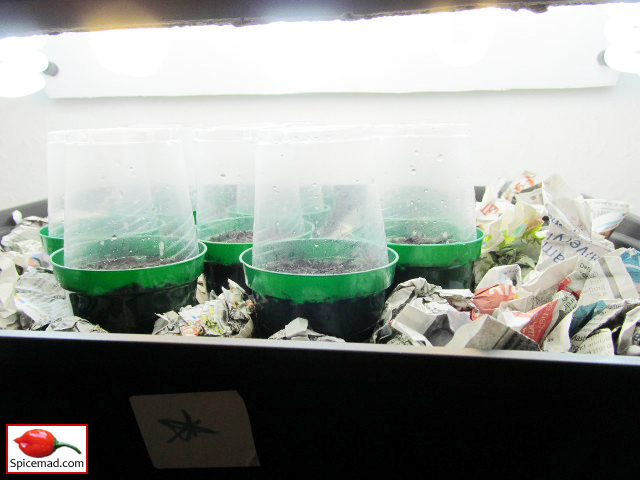
Chinense and Pubescens Seeds in Heated Propagator - 3rd February 2018

The grow lights will go on to a 16/8 cycle in about six days once the first seeds have germinated. All hail the Chilli Gods.